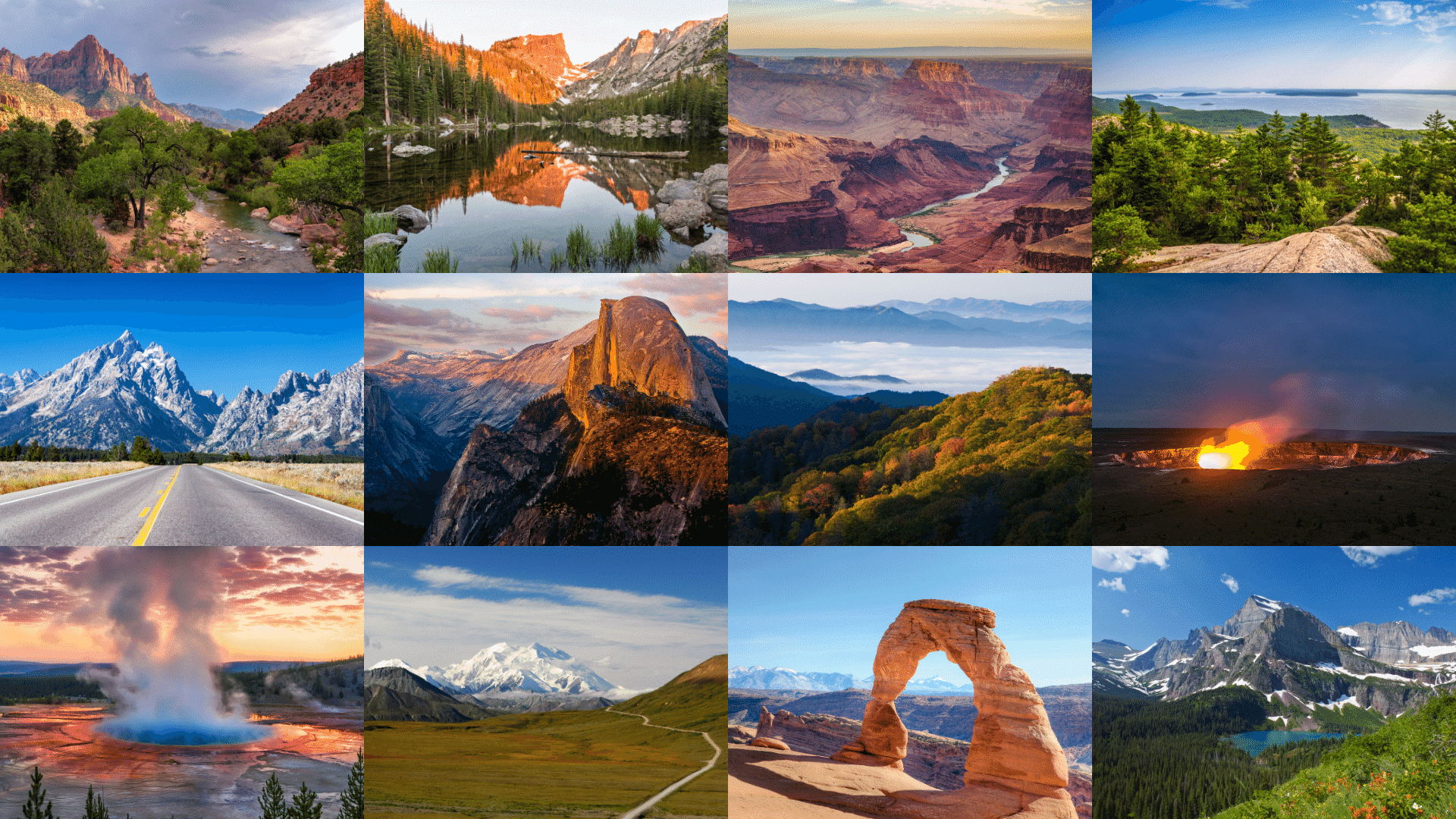
A Collage of 12 Different National Parks.
U.S. Dept. of the Interior, "NPGallery Search," NPS.
A Collage of 12 Different National Parks.
While not explicitly stated in the Constitution, access to nature was recognized as a fundamental right in America, especially during the times leading to the establishment of the National Park Service. Conservationists argued that both present and future generations deserved the ability to experience the natural and man-made wonders of the world. They pushed for government intervention in these areas and combatted those who believed in individual property rights. Beyond human rights, they also fought to protect the ecosystems themselves, aiming to preserve unique habitats from wildlife exploitation and destruction.
"But our national heritage is richer than just scenic features; the realization is coming that perhaps our greatest national heritage is nature itself, with all its complexity and its abundance of life, which, when combined with great scenic beauty as it is in the national parks, becomes of unlimited value. This is what we would attain in the national parks."
-Wright, Dixon, and Thompson, Fauna of the National, p. 38.
As a result, naturalists turned towards the government to take responsibility for saving the land. From artists to politicians, Americans nationwide urged lawmakers to pass legislation that would safeguard the nation’s wonders from commercialization and ruin. By passing the Organic Act of 1916, the government formally adopted the responsibility of protecting America’s natural, cultural, and historical heritage, not just from economic use, but for public enjoyment and education. Additionally, this act displayed the American Government’s responsibility to its people, adhering to their concerns for the wilderness and requests for change. Through enacting this bill, the government upheld democratic ideals, ensuring that natural spaces remained accessible to all while demonstrating a commitment to listening to the will of its people.
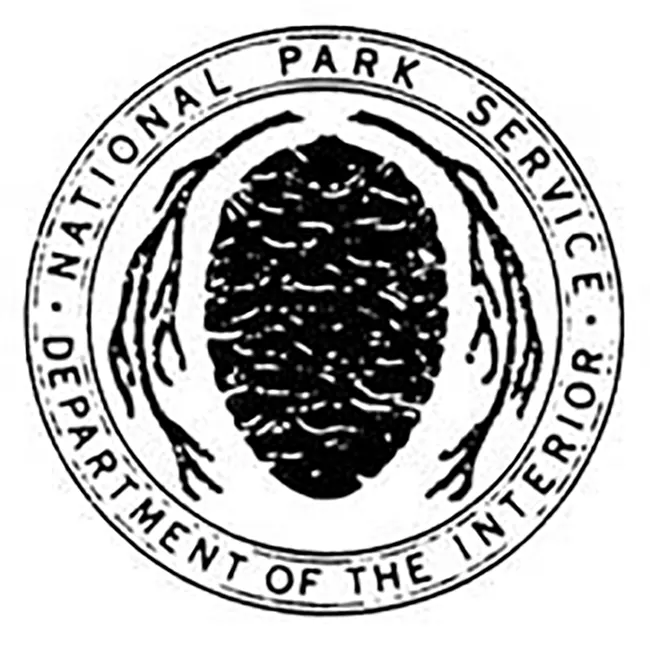
NPS Emblem 1949.
However, the institution of the National Park Service also highlighted severe injustices towards Native Americans. Because of this bill, indigenous peoples had ceremonial and culturally significant land taken from them without even being considered by Americans. Tribes like the Shoshone in Yellowstone and the Ahwahneechee in Yosemite, among many others, were forcefully displaced from their ancestral lands as the government prioritized conservation over their rights. While it may have protected the rights of Americans and generations to come, the creation of the National Park Service did so at the cost of the rights of the people who originally resided there.
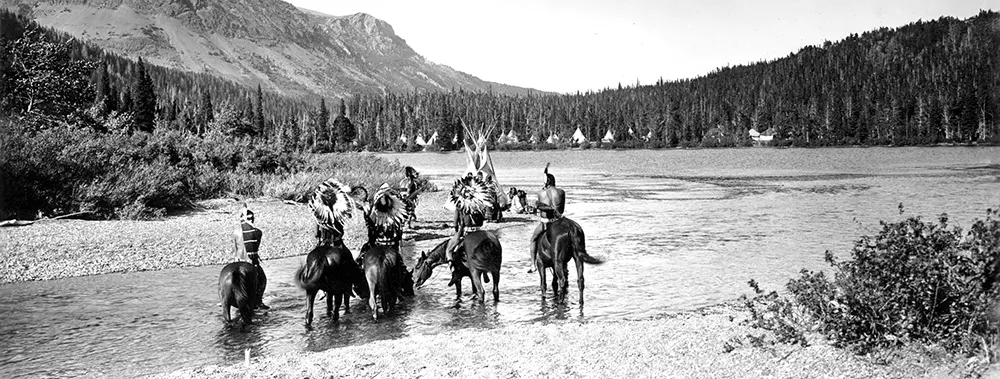
Blackfeet in the Two Medicine.
Although not perfect, the establishment of the National Park Service represents a significant advancement towards conservation for the United States, and the world as a whole. America has been praised for the functionality and influence of this system, deeming the National Park Service as “America’s best idea,” and the nation as a leader in protecting natural and cultural heritage.